
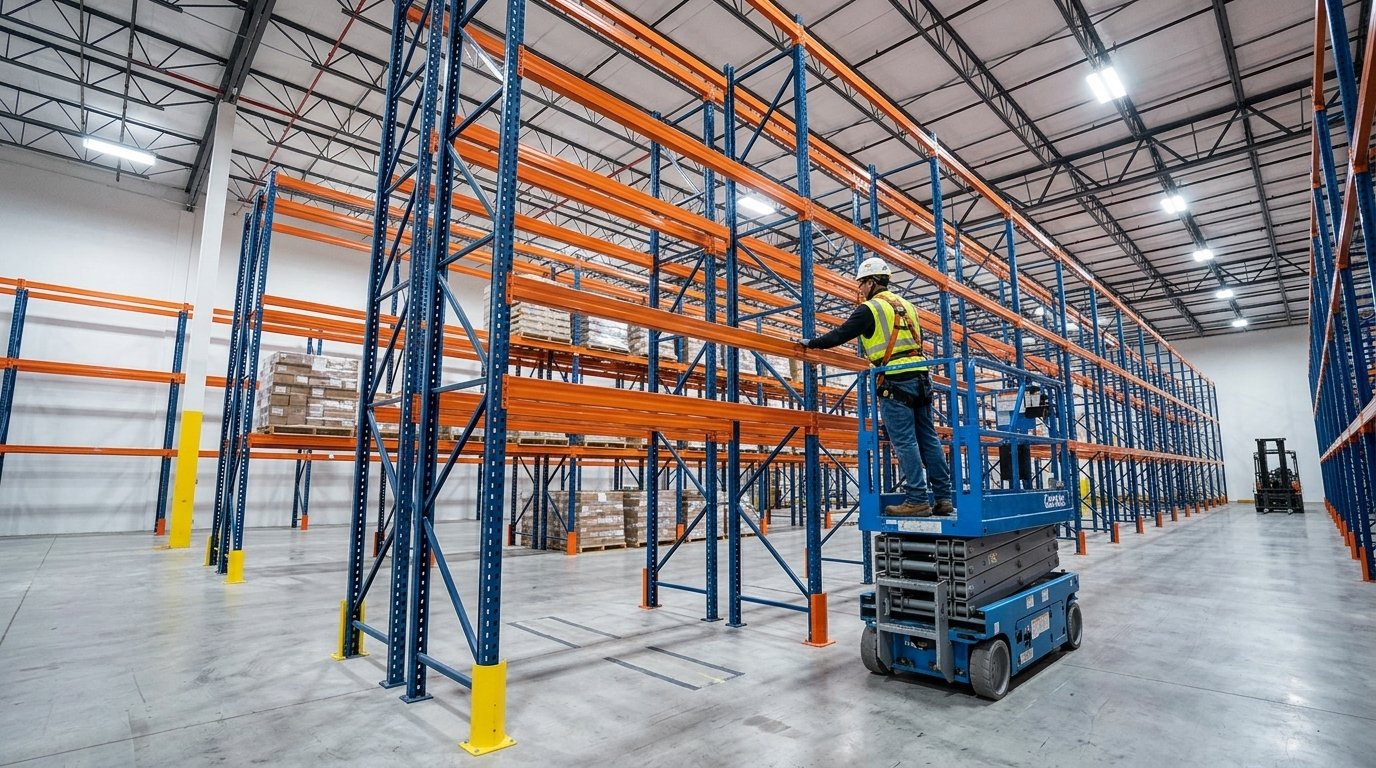
As South Florida continues its growth as a premier international trade hub, industrial real estate across Fort Lauderdale and Miami is at an all time premium. Whether you are reconfiguring your existing distribution center to boost storage density, relocating to a larger logistics space near Port Everglades or Miami International Airport, or closing down a facility, warehouse racking systems sit at the center of your operations.
Industrial pallet racking teardown, removal, and installation are far more complex than simply unbolting steel uprights and moving beams. In Broward and Miami Dade counties, racking projects involve strict engineering reviews, high velocity hurricane zone considerations, seismic and slab load calculations, and stringent municipal permitting standards.
A single oversight such as unpermitted teardowns, improper floor anchor cutting, or unbalanced beam loading can trigger costly municipal code violations, structural failures, or severe safety hazards. Here is your complete operational guide to managing warehouse racking removal and installation in Fort Lauderdale and Miami.
1. Navigating Permitting & High Velocity Building Regulations in South Florida
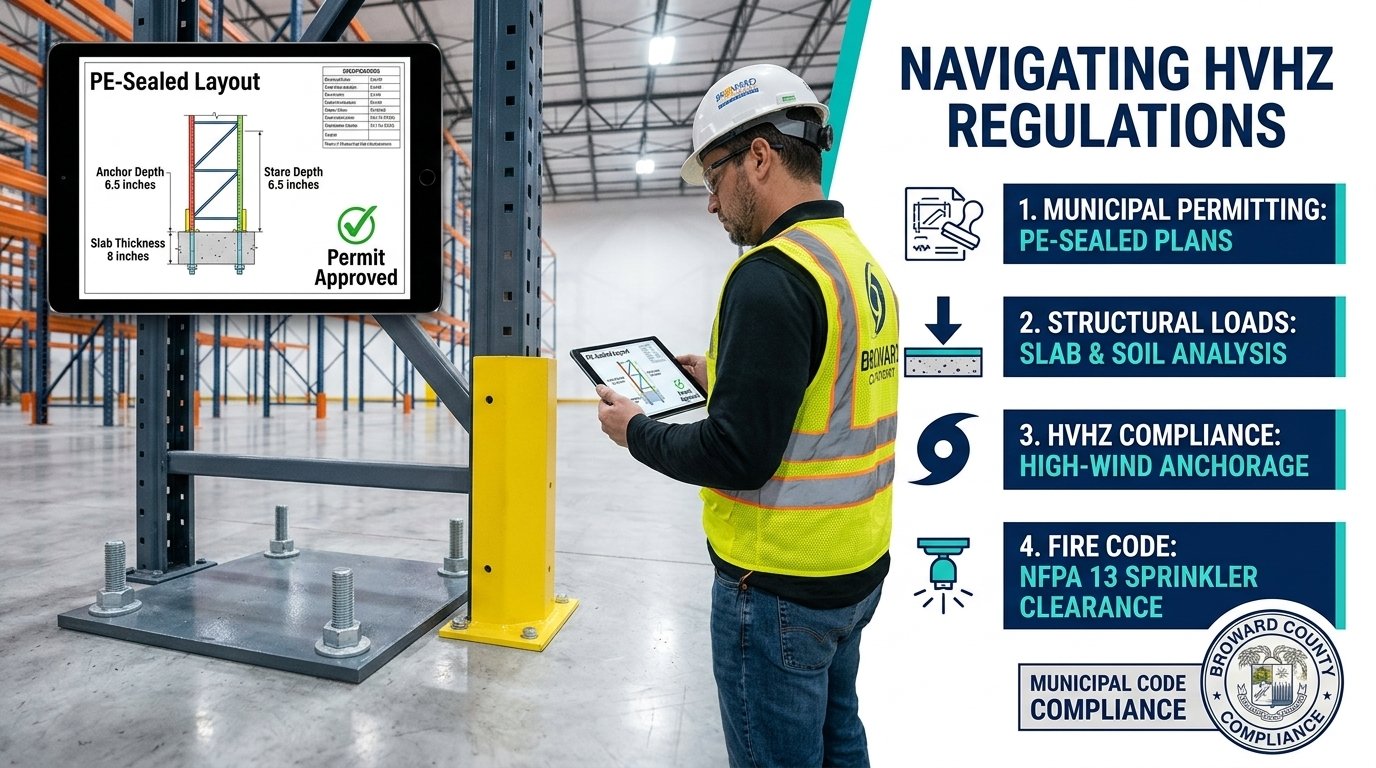
One of the most common misconceptions among warehouse managers in Fort Lauderdale and Miami is that pallet racking is classified as temporary furniture. In South Florida, industrial racking over 8 feet tall is legally classified as a structural installation that requires comprehensive municipal building permits.
Because South Florida sits within a High Velocity Hurricane Zone (HVHZ), local building departments in Miami Dade and Broward counties enforce stringent structural rules regarding slab thickness, anchor depth, and overhead clearance.
Key Permitting & Structural Mandates:
- PE Sealed Layout Drawings: Municipalities require signed and sealed engineering calculations from a Florida licensed professional engineer (PE) verifying that the concrete slab can support the point loads of the proposed racking layout.
- Fire Code & Sprinkler Clearance: Building inspectors evaluate high density selective racking, push back, or drive in systems against local fire codes (NFPA 13). Adequate flue space between pallets must be maintained for overhead sprinkler penetration.
- HVHZ Anchor Integrity: High reach racking systems must account for potential building movement and structural load distribution during extreme weather events, ensuring anchors do not shear under dynamic strain.
SOUTH FLORIDA WAREHOUSE REGULATION:
Dismantling or installing industrial racking without municipal permits in Miami or Fort Lauderdale can result in immediate stop work orders, double permit fee penalties, and delayed lease sign offs during facility handovers.
2. Safe Dismantling & Warehouse Racking Teardown Protocol
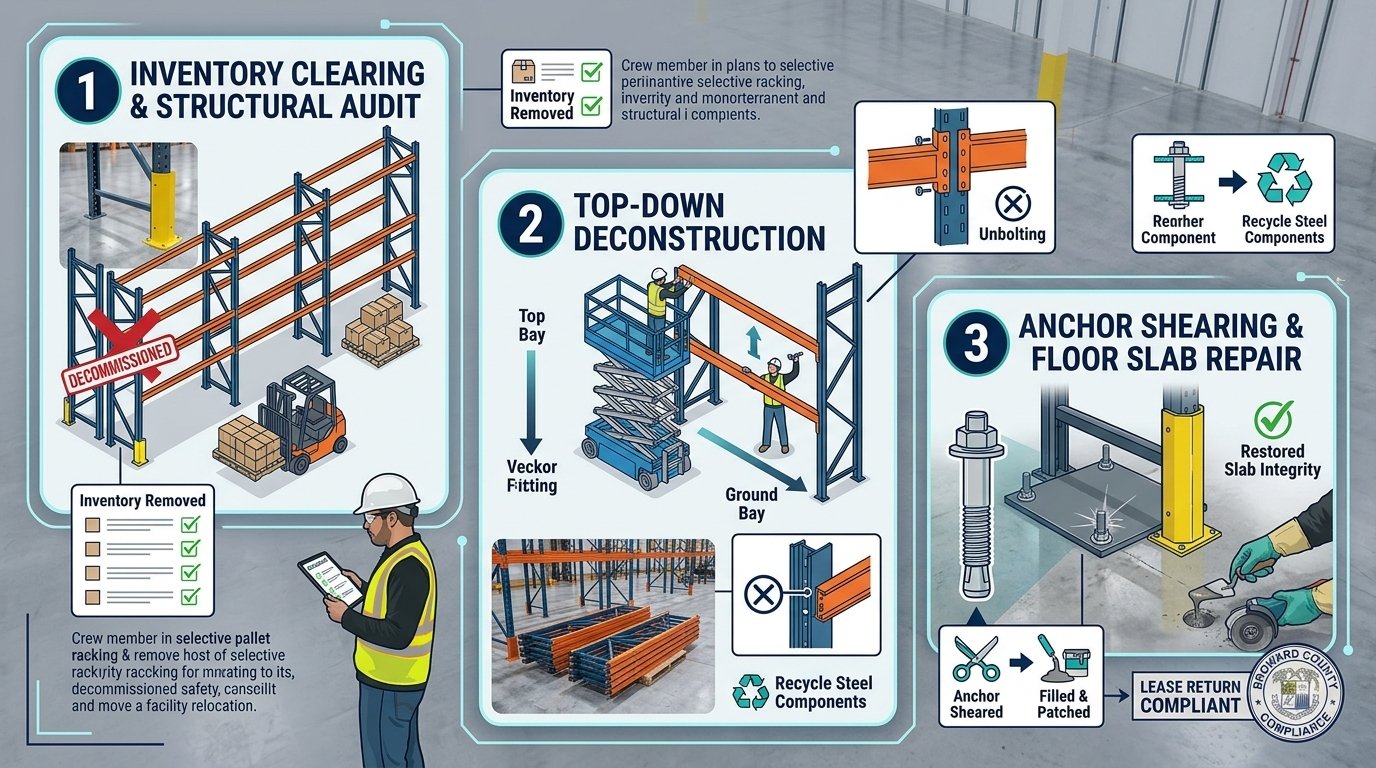
Teardown and removal require a systematic, safety first approach. Disassembling heavy steel frames improperly can cause sudden structural collapse, endangering workers and damaging facility concrete.
When decommissioning a warehouse racking system, professional industrial contractors follow strict sequence protocols to keep crews safe and maintain the structural value of the materials.
Steps in a Professional Racking Removal:
- Inventory Clearing & Structural Audit: Before a single bolt is loosened, crews conduct a full audit to ensure all pallet inventory is removed and lower bays are clear of obstruction.
- Top Down Deconstruction Sequence: Starting from the top bays down, safety certified scissor lift operators remove wire decking, safety bars, and horizontal support beams using systematic locking pin release techniques.
- Anchor Shearing & Floor Slab Repair: Once beams are removed, upright frames are unbolted from concrete slabs. Floor anchors must be flush cut or pulled, and anchor holes filled with non shrink epoxy grout to restore slab integrity for landlord lease return conditions.
3. Precision Installation & Substrate Preparation
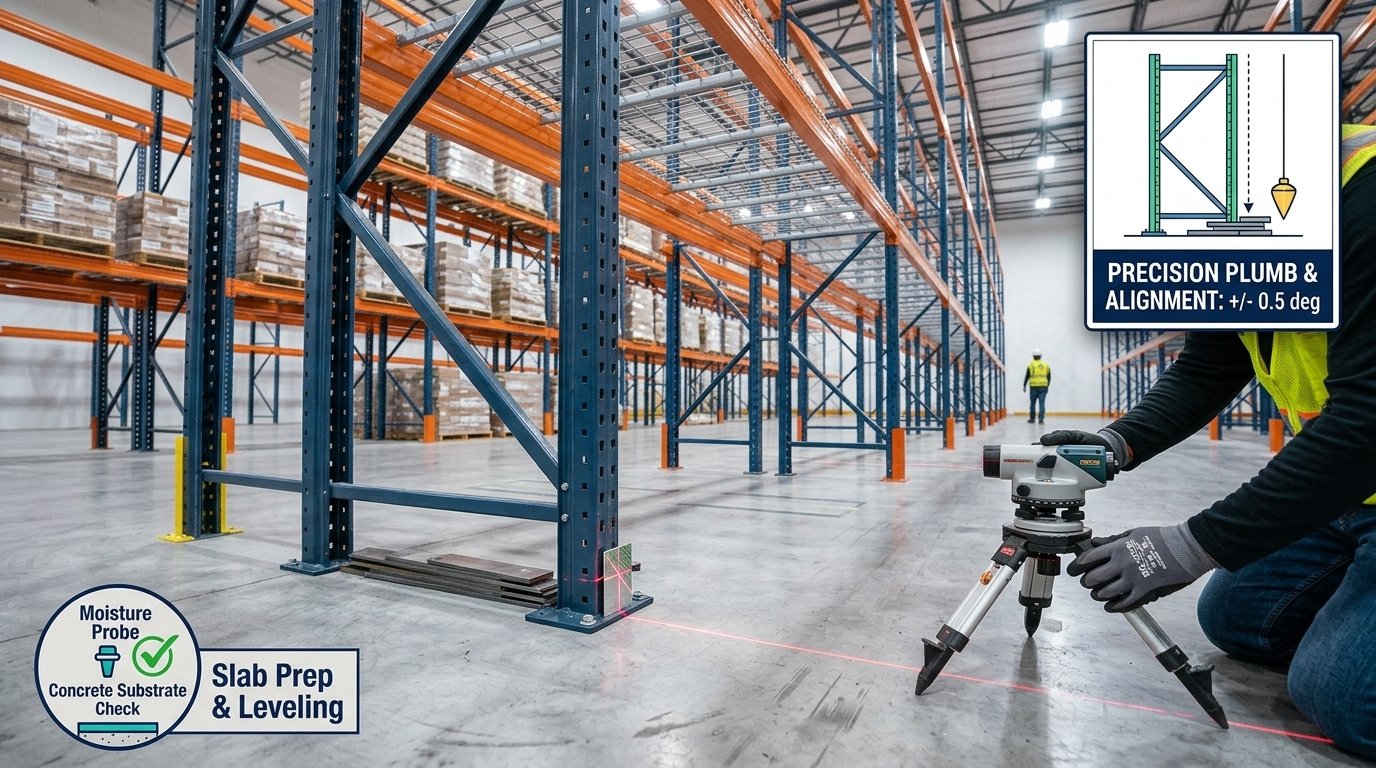
Installing pallet racking in Fort Lauderdale or Miami requires rigorous precision to ensure long term structural balance and forklift safety. Industrial concrete slabs in South Florida often present uneven moisture profiles or subtle grade variations that must be compensated for during installation.
Proper anchor selection, plumb alignment, and safety accessories are critical to creating an efficient, high capacity storage system.
Installation Best Practices:
- Laser Leveling & Steel Shimming: Installers use precision laser transit levels to establish baseline floor elevations, placing heavy duty steel shims under frame baseplates to guarantee absolute vertical plumbness.
- Heavy Duty Concrete Anchoring: High torque wedge or adhesive anchors are installed to exact PE engineered depth specs, ensuring maximum pull out resistance under heavy forklift impacts.
- Safety Guardrail & Post Protection: Protecting upright frames with heavy gauge steel column protectors and row end guards prevents costly damage from daily material handling equipment.
4. Managing Warehouse Relocations & Lease Return Compliance
If your business is relocating from a facility in Fort Lauderdale to a new industrial park in Miami (or vice versa), coordinating the timeline between lease termination and new site setup is critical.
Commercial landlords in South Florida hold tenants strictly accountable for restoring warehouse spaces to original conditions before security deposit returns are processed.
| Relocation Phase | Critical Action Items | Operational Risk Avoided |
| Pre Move Engineering | Site survey, slab moisture test, and permit application at new site | Permit delays stalling operational launch |
| System Teardown | Systematic beam disassembly, pallet stacking, and safe transport | Damaged rack components during transit |
| Slab Restoration | Grinding cut anchors flush and filling holes with non shrink epoxy | Landlord deposit deductions & lease dispute |
| New Installation | Laser leveling, heavy anchoring, and final municipal engineering inspection | Unsafe loading conditions & failed final inspection |
5. Choosing the Right Industrial Contractor in South Florida
Executing a seamless warehouse racking teardown or installation requires an experienced industrial contractor who understands South Florida’s unique building environment.
Look for a turnkey partner capable of handling the entire scope from structural engineering, permitting, and teardown to floor slab restoration, re installation, and protective painting.
What to Demand from Your Racking Contractor:
- Licensed & Fully Insured Crews: Ensure the contractor holds active Florida commercial contractor licensing with full Workers’ Compensation and multi million dollar liability coverage.
- Flexible Shift Capabilities: Choose a team capable of performing night, weekend, or staggered phase installations to keep your ongoing fulfillment operations running.
- Turnkey Permit Management: Partner with an entity that manages municipal permitting directly with Broward and Miami Dade building departments to ensure full compliance.
Streamline Your South Florida Warehouse Operations with Foersch Contracting
Relocating, installing, or removing warehouse racking in Fort Lauderdale and Miami doesn’t have to interrupt your supply chain. By prioritizing structural engineering, local permit compliance, safe removal protocols, and precise installation, you protect your workers, your inventory, and your bottom line.
Need a certified partner to handle your next warehouse racking teardown, installation, or facility reconfiguration? Foersch Contracting provides turnkey industrial contractor services, rack teardown, concrete repair, and commercial facility upgrades tailored specifically to South Florida logistics hubs.