

If you run a commercial facility, warehouse, or office park in South Florida, you already know that operating here comes with a unique set of structural and environmental challenges. Between relentless humidity, scorching afternoon heat, salt laden coastal breeze, and sudden torrential downpours during hurricane season, local properties are put to the test 365 days a year.
Unplanned business downtime is any commercial property manager’s worst nightmare. A sudden HVAC failure during an August heatwave, severe roof leaks after an afternoon storm, or degraded safety surfaces in a high traffic warehouse don’t just interrupt day to day work they trigger costly emergency service rates, ruin expensive inventory, and present significant liability risks for tenants and visitors.
The difference between continuous operation and expensive emergency shutdowns comes down to proactive strategy. By taking a preventative, localized approach to property upkeep, facility leaders in Davie, Fort Lauderdale, and surrounding Broward County communities can protect their investments and maintain seamless daily workflow. Here are the five critical facility maintenance steps every local operator needs to execute.
1. Prioritize Commercial HVAC & Dehumidification Pre Conditioning
In South Florida, commercial HVAC systems aren’t a luxury they are the central lifeline of your building’s environment and operational infrastructure.
With average humidity levels routinely exceeding 80% throughout Davie and Fort Lauderdale, cooling units work significantly harder than they do in almost any other region in North America. When an industrial AC unit or rooftop chill pack breaks down, temperatures inside office spaces, retail showrooms, or distribution centers can skyrocket within hours. More critically, uncontrolled interior moisture rapidly leads to mold contamination, equipment corrosion, and ruined drywall or ceiling tiles.
Key HVAC Actions for South Florida Property Managers:
- Clear Condensate Lines: Inspect drain lines and condensate pans monthly to clear algae, mold, and scale buildup that causes severe indoor water overflow.
- Schedule High Frequency Filter Changes: Replace high efficiency air filters quarterly (or monthly in high dust warehouse environments) to reduce mechanical strain on compressors.
- Perform Thermal Imaging Audits: Conduct bi annual thermal imaging audits on ductwork and air handlers to identify cold air leaks and moisture accumulation spots before structural damage occurs.
LOCAL OPERATIONAL FACT:
Emergency HVAC calls in South Florida cost up to 60% more during peak summer months compared to routine scheduled servicing. Preventative maintenance keeps equipment running at peak energy efficiency while avoiding emergency repair premiums.
2. Execute Regular Roof, Waterproofing, and Building Envelope Audits

South Florida’s weather cycle is famously aggressive. Intense daily UV exposure degrades seals and elastomeric coatings, while sudden tropical downpours pressure test every joint, seam, and flashing point on your building envelope.
Water intrusion is one of the fastest ways to force a partial or total business closure. A small ceiling leak over a server rack, manufacturing equipment, or retail sales floor can destroy tens of thousands of dollars in commercial assets within minutes.
Building Envelope Best Practices:
- Routine Drain & Scupper Inspections: Clear flat roof scuppers, internal drains, and gutters of debris, palm leaves, and silt ahead of hurricane season (May–November).
- Seal Expansion Joints & Masonry: Inspect expansion joints, window caulking, and exterior stucco walls for micro fractures caused by thermal expansion and ground movement in Davie’s moist soil.
- Maintain Protective Coatings: Apply UV reflective elastomeric roof coatings to reduce solar thermal absorption, shield underlying membranes, and drop internal cooling costs.
3. Maintain Protective Floor & Wall Coatings in High Traffic Areas
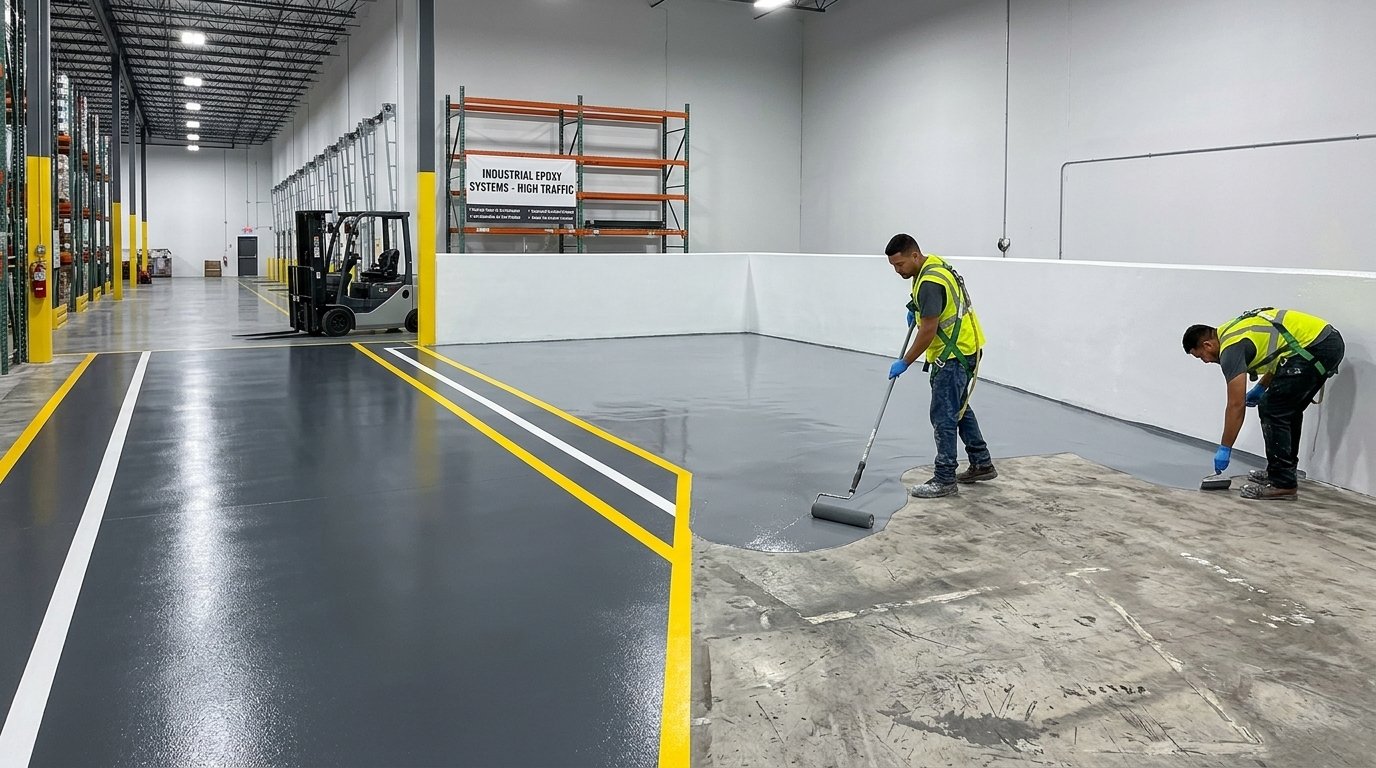
Whether you manage a manufacturing plant off State Road 84 in Davie or a commercial distribution center near Port Everglades in Fort Lauderdale, your interior surfaces take a beating. Heavy forklift traffic, pallet movement, moisture intrusion from sub slabs, and constant foot traffic rapidly wear down unconditioned concrete floors and lower walls.
Cracked concrete, peeling floor paint, and bare industrial slabs aren’t just aesthetic issues. They are major safety hazards that cause employee slips, trips, and industrial equipment damage.
Surface Coating Strategies for Commercial Spaces:
- Industrial Epoxy & Protective Systems: Upgrade standard concrete floors to high performance, non slip epoxy or urethane slurry coatings that withstand heavy industrial machinery and chemical spills.
- Heavy Duty Wall Finishes: Ensure loading dock doors, service corridors, and exterior staging areas feature scuff resistant, washable industrial wall paint to resist moisture and impact damage.
- Routine Joint Sealing & Maintenance: Establish a scheduled floor scrub and reseal program to keep surface traction high and eliminate moisture buildup in high traffic footpaths.
4. Perform Scheduled Electrical System & Back Up Generator Testing

Power fluctuations, lightning strikes, and rolling grid disruptions during coastal storms are a common reality in Broward County. An unexpected power outage can halt manufacturing lines, corrupt digital databases, and disable security and access control systems.
Having an emergency back up generator is essential, but a generator that fails to start when the main grid drops is a preventable operational disaster.
Critical Electrical Checks:
- Infrared Panel Scans: Perform routine infrared thermography tests on main breaker panels and switchgear to identify overloaded circuits and hot spots before they trip or fail.
- Weekly Generator Load Testing: Exercise commercial back up generators weekly under load, check fuel quality for moisture/microbial contamination, and replace battery chargers annually.
- Surge Suppression Maintenance: Inspect surge protection devices (SPDs) across all main distribution boards to shield delicate electronic systems from South Florida’s high frequency of lightning strikes.
5. Establish a Strategic Local Partner Network Before Disasters Hit
When a major tropical storm rolls through Fort Lauderdale or a pipe bursts inside a Davie facility at 2:00 AM, trying to find an available, licensed contractor on the spot is a risky position. High demand repair services get booked out immediately, leaving uncontracted facility managers waiting days for emergency repairs while their doors remain closed.
Building a long term relationship with a full service local commercial contractor ensures your business gets priority response, transparent pricing, and specialized care tailored specifically to local building codes and environmental conditions.
What to Look for in a Local Maintenance Partner:
- Deep Local Experience: Choose a team with established experience operating under Broward County and South Florida building codes.
- Multi Discipline Capabilities: Work with contractors capable of handling multiple disciplines from building painting and concrete restoration to ongoing structural maintenance and emergency repairs.
- Proactive SLA Agreements: Partner with a team that provides scheduled, custom preventative maintenance programs rather than just reactive emergency fixes.
Keep Your Broward County Facility Operating Smoothly
Preventing business downtime in Davie and Fort Lauderdale isn’t about luck it’s about execution. By staying ahead of HVAC moisture issues, protecting your building envelope, maintaining safety coatings, testing electrical systems, and partnering with experienced local commercial contractors, you ensure your operations stay safe, compliant, and uninterrupted regardless of the weather outside.